


Views: 0 Author: Site Editor Publish Time: 2026-04-13 Origin: Site


Road lighting projects often become more complicated than expected once trenching, cabling, and future repairs enter the budget. That is why many municipalities and contractors now look at the solar street light as a practical option for selected urban roads and public areas. Instead of treating solar lighting as a niche solution, Hengtianyuan Lighting develops it as a serious outdoor system for projects that need cleaner installation, lower dependence on grid power, and more manageable long-term operating costs.
City lighting is not only about buying poles and fixtures. The full cost includes underground cable work, coordination with utilities, electricity use, and maintenance over many years. On redevelopment roads or expanding districts, civil work can quickly turn a simple lighting plan into a costly infrastructure task.
This is where solar lighting becomes attractive. A solar system can reduce the amount of underground work required and help a project move ahead without waiting for full grid expansion. For roads under construction or areas where utilities are still being upgraded, that advantage is practical rather than theoretical.
Long-term cost also matters. Road lights operate for hours every night, so energy use continues to affect municipal budgets long after installation is complete. When a project owner wants better lighting without locking in higher power costs, solar deserves serious consideration.
A city road needs lighting for more than visibility on asphalt. It affects pedestrian comfort, traffic guidance, and confidence in public infrastructure. Poor lighting can make side roads, public walkways, and shared spaces feel less safe and less usable.
A solar solution also adds resilience in locations where power stability is not always guaranteed. That does not mean it replaces every conventional system, but it can provide strong value in city areas where dependable night lighting is needed without full reliance on the grid.
Not every urban road needs the same type of lighting plan. Secondary roads, access roads, and newly built districts are often the places where solar works best. In these locations, grid extension may take time, while the need for safe lighting arrives much earlier.
A solar street light helps bring lighting into service while development continues. This is useful in residential expansion zones, mixed-use districts, and connecting roads where construction schedules are tight and the site needs to become functional quickly.
Public spaces are another strong fit. Parks, plazas, waterfront routes, and walking paths benefit from lighting that supports visibility without requiring extensive underground cabling. In landscaped or finished public areas, reducing installation disruption is a major advantage.
A city street lamp in these areas should also balance function and appearance. The goal is clear and comfortable night lighting, not an overly harsh road effect. Solar systems can support that balance while making future expansion easier if the public space grows or changes.
Outer districts, service roads, riverside developments, and transition zones often need lighting before full infrastructure is in place. These areas are still part of the city, but extending power can be slow or expensive. Solar lighting is often well suited here because it allows urban projects to move forward without waiting for major electrical work.
Site Type | Main Lighting Need | Why Solar Fits | Key Specification to Check |
Secondary urban roads | Safer vehicle and pedestrian visibility | Less cable work and faster rollout | Battery capacity |
Newly developed districts | Lighting during ongoing construction | Easier coordination with other works | Pole height and beam spread |
Parks and walkways | Comfortable public lighting | Cleaner installation | Glare control |
Waterfronts and squares | Flexible lighting layout | Easier expansion | Corrosion protection |
Outer districts and service roads | Lighting with limited grid access | Off-grid operation | Panel and battery balance |
The best use case is not every road in a city. It is the road or public area where infrastructure pressure, civil work cost, and lighting demand make solar the more efficient option.
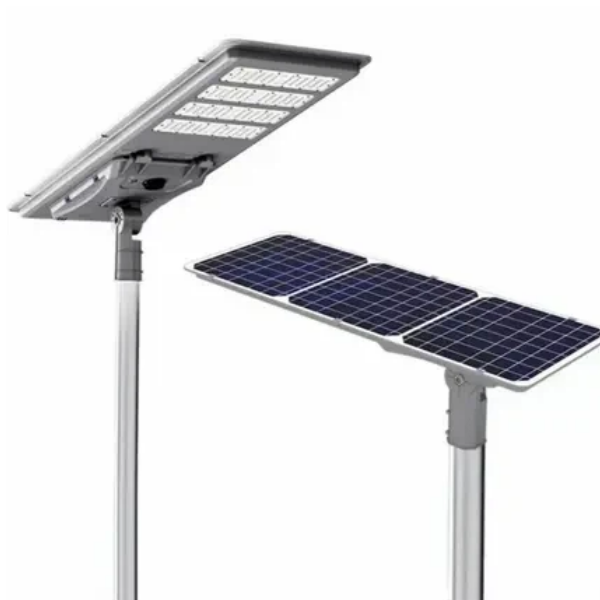
One of the biggest misunderstandings about solar lighting is the idea that panel size alone determines quality. In fact, performance depends on the whole system working together. The panel collects energy, the battery stores it, the controller manages output, and the LED luminaire turns that stored power into useful light.
If one part is poorly matched to the others, the result may look strong on paper but perform weakly in real conditions. For city use, balance matters more than a single large component. A road lighting system must perform through changing weather, repeated nightly cycles, and varying seasonal daylight.
Hengtianyuan Lighting approaches solar lighting as an integrated outdoor solution, which is especially important for municipal and project-based applications.
A good project plan should reflect real local weather rather than ideal sunshine. Cloudy periods, seasonal shifts, and operating hours all affect how a solar street light performs. That is why autonomy days matter. A system should be designed to continue operating through short periods of weak sunlight.
Dimming strategy is just as important. Many city roads need stronger light during early evening and lower output later at night. Intelligent control allows the system to use stored energy more efficiently while still matching the actual lighting demand of the site.
Solar lighting reduces several traditional costs, but it does not remove maintenance entirely. Panels must remain reasonably clean, batteries have service-life limits, and the pole structure still needs inspection in outdoor conditions.
This is not a drawback. It is simply part of treating solar road lighting as infrastructure rather than a short-term product. The projects that perform best are the ones planned with realistic maintenance expectations from the start.
The durability of the structure is just as important as the performance of the light. Road installations must handle wind, rain, heat, dust, and long service periods outdoors. That makes pole strength, surface treatment, and corrosion resistance essential points in the approval stage.
This is especially important for exposed roads, waterfront districts, and public spaces with demanding weather conditions. A lighting system may operate for years in environments far tougher than they appear during installation.
Brightness alone is not enough. The fixture must match the actual site. A service road, a public path, and a small square do not need the same optical distribution. If light is too narrow, dark areas remain. If it is too broad, the result may feel wasteful or uncomfortable.
A city street lamp should therefore be selected according to road width, path layout, and expected night activity. Good application fit is what turns a product into an effective lighting solution.
Public projects usually require more than product claims. Technical data, drawings, structural details, and consistent supply are all part of the process. In practice, a strong lighting solution becomes much easier to approve when the documentation is clear and the project support is reliable.
As a manufacturer of road lights, solar lights, landscape lights, and steel poles, Hengtianyuan Lighting supports this kind of project requirement with a product range designed for public outdoor use.
Urban lighting upgrades rarely start from zero. They often involve road extensions, public-space improvements, or outer-city development where electrical work would add delay and cost. In those cases, solar lighting can solve more than one problem at once. It can reduce civil work, shorten installation time, and help bring lighting online earlier.
That is why solar makes particular sense in phased projects. A city can improve one section first, then expand later without reworking a complex cable network.
Once the use case is clear, the discussion should stay practical. How wide is the road. How many hours of operation are needed. What weather conditions must the system handle. What pole height and beam pattern fit the site. These are the questions that decide whether solar is the right choice.
This focus is important because people searching this topic are usually trying to answer a real project question. They want to know when solar works, where it fits best, and what should be checked before ordering. That is exactly where a well-designed city solar lighting plan creates value.
A Solar Streetlights system is not the answer for every urban road, but it is an effective solution for city areas that need lower grid dependence, simpler installation, and better control over long-term operating costs. Secondary roads, public walkways, developing districts, and infrastructure edge zones are often the strongest applications. With integrated design, durable structures, and project-focused support, Hengtianyuan Lighting helps turn solar road lighting into a practical option for municipal and commercial projects. If you are planning a road or public-space upgrade, contact us to discuss the right solution for your site.
No. It is most suitable for selected urban roads such as secondary roads, access roads, walkways, public spaces, and developing districts where grid extension is limited or expensive.
Because lighting can be installed without waiting for full electrical infrastructure, which helps bring roads and public areas into service faster.
The key factors are panel size, battery capacity, controller settings, LED efficiency, local sunshine conditions, and proper light distribution for the site.
They should check structural strength, corrosion protection, battery design, beam pattern, controller strategy, and project documentation to make sure the system matches the real road environment.


