


Views: 0 Author: Site Editor Publish Time: 2026-04-27 Origin: Site


A garden can look carefully planned in daylight and still feel dull, patchy, or too sharp after dark, which is why the question of street light best for garden matters more than many property owners expect. The right answer depends on how the garden is used at night, how people move through it, and how much brightness the space really needs. For villas, courtyards, landscaped communities, and shared outdoor areas, Hengtianyuan Lighting approaches garden lighting as a complete outdoor layout rather than a single decorative fixture.
The first job of garden lighting is often movement. Paths, corners, step changes, and border edges need enough light for people to walk comfortably without feeling unsure about where the path begins or ends. This is especially important in private gardens with winding routes, small elevation changes, or planting that partially hides the walkway at night.
A good garden lighting plan does not need to flood these areas with brightness. It needs to guide movement clearly. When lighting is placed at the right intervals and aimed properly, the path becomes easier to follow and the whole garden feels calmer and more usable after sunset.
Not every garden zone needs the same level of light. Seating areas, terraces, and small outdoor gathering spaces often work better with softer illumination than pathways or entrances. People usually want these places to feel relaxed rather than exposed. If the light is too strong, the garden loses depth and comfort.
This is where the idea of balance becomes important. A garden should not be treated like a road project. The lighting should support the mood of the space while still making it easy to use. A softer layer of light often creates a more refined result than a stronger fixture placed without enough control.
Entrances and driveway edges need a more practical approach. These are the points where people arrive, vehicles turn, and the property makes its first impression at night. In these areas, the lighting should feel stable and clear. It should help visitors see the route, support everyday movement, and make the property look complete rather than unfinished after dark.
A stronger outdoor street lamp style can work well here, especially when the entrance opens into a larger garden or villa frontage. The aim is to create a cleaner transition between the outside road and the private landscape.
Lower-profile fixtures are often the best fit for narrow paths and walkway edges. They help define movement without overwhelming the planting or creating glare at eye level. In smaller gardens, this kind of layout can be more effective than using taller poles everywhere.
The advantage is visual control. The path stays readable, the garden remains comfortable to look at, and the lighting does not dominate the landscape design.
Larger lawns and more open villa gardens usually need a wider spread of light. This is where a garden light pole becomes useful. A pole-mounted solution can carry light further across the space and support a cleaner overall layout, especially when the property includes open turf, broad planting beds, or longer visual lines.
Instead of placing many small fixtures across the lawn, a few well-positioned pole lights can keep the design more orderly. This approach also makes sense in shared landscaped spaces where consistency matters.
Boundary lines, gates, and driveway entrances often benefit from a more defined fixture style. These areas need stronger visibility and a more structured look than private planting zones. A taller fixture or more pronounced outdoor street lamp design can help mark these edges clearly and improve the way the whole property reads at night.
This is especially useful in gardens connected to villas, residential compounds, or formal courtyards where the edge of the property is part of the overall presentation.
Some parts of a garden exist to be seen rather than crossed. A sculpture, feature tree, planted corner, or water element may need accent lighting rather than general illumination. This is important because not every zone should be lit the same way. A successful garden layout combines guidance, comfort, and emphasis in different proportions.
Garden Area | Main Goal | Recommended Fixture Style | Notes on Height or Glare |
Path edges | Safer walking | Low-profile path lighting | Keep glare low and spacing even |
Seating zones | Softer atmosphere | Warm, controlled fixtures | Avoid excessive brightness |
Open lawns | Wider area coverage | Garden light pole | Match pole height to open space |
Gates and driveways | Clear visibility | Stronger outdoor street lamp | Support arrival and vehicle movement |
Focal points | Visual interest | Accent lighting | Highlight without overpowering |
The best result usually comes from mixing fixture types rather than expecting one product to solve every part of the garden.
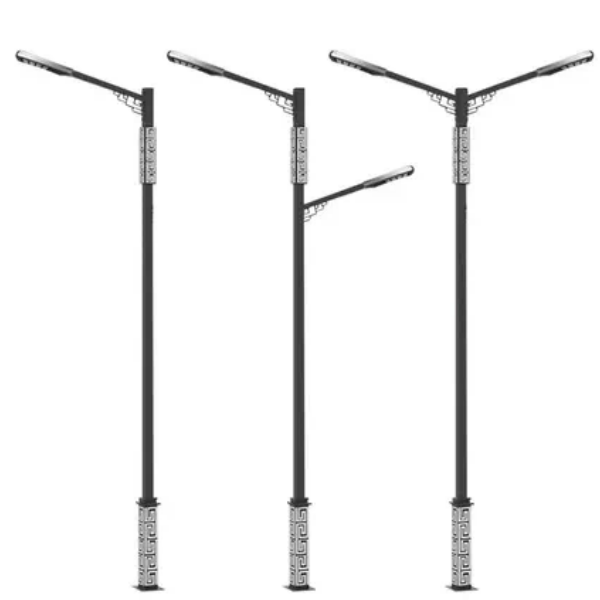
A garden can become overlit very quickly when pole height and spacing are not matched to the space. If fixtures are too close together, the layout feels crowded and bright in the wrong way. If they are too far apart, the result is uneven and uncertain.
Height also changes the character of the garden. A taller pole may be right for an open lawn or boundary edge, but it can feel too strong beside a small path or seating corner. Good garden lighting always responds to scale. The space should feel natural at night, not forced into a road-lighting pattern.
Light color has a strong effect on how the garden feels. Warmer tones often suit planting, seating areas, and private residential landscapes because they create a calmer atmosphere. Neutral tones may work well around entrances and paths where a little more visual clarity is useful.
Glare control is just as important. A fixture that looks bright on paper may feel uncomfortable in real use if people can see the source too directly. Garden lighting should help people enjoy the space, not make them avoid looking toward it.
Garden lighting stays outdoors through rain, moisture, dust, and seasonal changes. That is why durability should be part of the buying decision from the beginning. A beautiful fixture loses value quickly if the finish deteriorates, the structure weakens, or the product needs frequent maintenance.
For long-term outdoor use, the lighting should be able to hold both its appearance and performance. This matters for private gardens, but it matters even more for shared landscapes and project-based installations where consistency has to last.
Smaller private gardens often work well with simpler layouts. If the lighting demand is modest and the areas are clearly defined, solar options can be useful for selected zones such as paths, edges, or small landscape accents. They can reduce installation complexity and keep the layout flexible.
The key is not to assume that every part of the garden should follow the same power strategy. Smaller spaces usually benefit from a lighter and more selective approach.
Larger gardens, villa projects, and shared outdoor landscapes often need a more structured system. Wider lawns, longer driveways, and entrance zones usually require stronger and more stable coverage. In these spaces, mains-powered layouts may be more suitable for the primary lighting structure, especially when the property expects regular nightly use.
The larger the site becomes, the more important planning, spacing, and durability become. A stronger structure and clearer fixture hierarchy often create a better result than trying to keep every element lightweight.
This is where a combined approach becomes valuable. Landscape lights can shape paths, focal points, and seating areas, while poles handle entrances, lawns, and boundary zones that need broader spread. Used together, they create a garden that feels both practical and visually balanced.
That combined layout is also where Hengtianyuan Lighting fits naturally into the topic. The company offers both landscape lighting products and pole solutions, which makes it easier to build a complete outdoor scheme instead of treating each zone as a separate decision.
Garden lighting works best when it is planned as a whole. The path should connect visually with the lawn, the entrance should belong to the same design language as the seating area, and the brighter zones should not overpower the quieter ones. That level of consistency is easier to achieve when the lighting range supports both decorative landscape needs and structural pole-based coverage.
For villa gardens, courtyards, community landscapes, and outdoor residential projects, Hengtianyuan Lighting provides solutions that help link these needs together. The goal is not simply to add more fixtures. It is to make the garden easier to use, better to look at, and more coherent after dark.
The best garden lighting plan is not built around the strongest fixture on the page, but around the right match between the zone, the mood, and the maintenance reality of the space. A path needs guidance, a lawn may need wider spread, and an entrance often needs a more defined presence. That is why the right answer to street light best for garden usually comes from combining layout logic with the right products. With coordinated solutions for poles and Landscape Lights, Hengtianyuan Lighting helps outdoor projects create gardens that stay practical, attractive, and comfortable at night. If you are planning a garden, courtyard, or landscape lighting upgrade, contact us to discuss the right solution for your project.
A lower-profile fixture with soft and even output is often the best choice for a path because it guides movement without causing strong glare.
A garden light pole is most useful in open lawns, larger villa gardens, and shared outdoor spaces where wider light spread is needed.
No. Too much brightness can make the space feel harsh and reduce comfort. Garden lighting usually works best when the output matches the specific zone.
Yes. Landscape lights are useful for paths, focal points, and softer areas, while pole lights are better for entrances, lawns, and boundary edges that need broader coverage.


